

Why Property Demand Is Skyrocketing Along Dwarka Expressway Gurgaon
25th August, 2026 15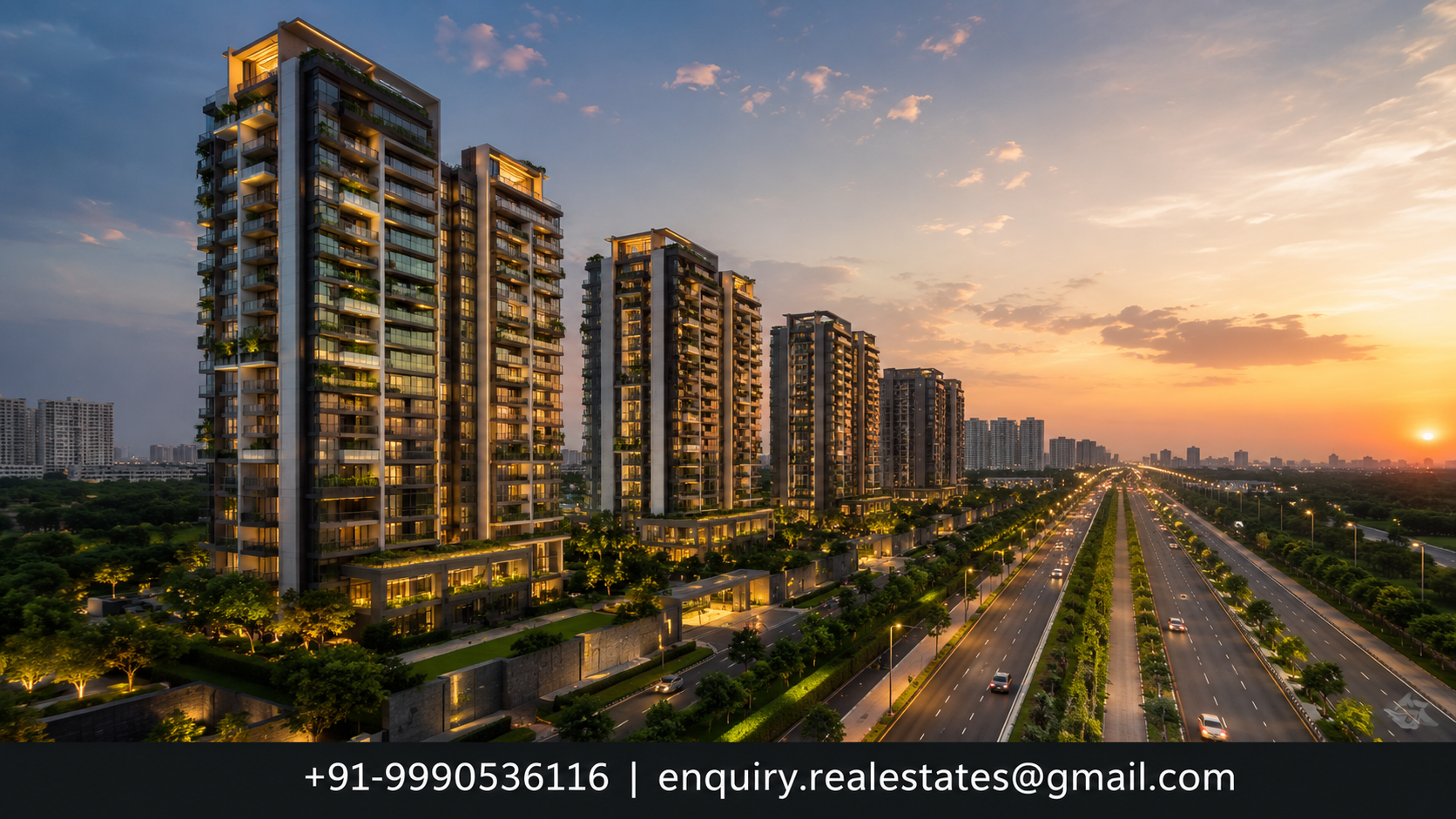
The northern and western frontiers of the National Capital Region have undergone a massive infrastructural metamorphosis over the past few years, with the Dwarka Expressway emerging as the crown jewel of this expansion. Stretching across a length of nearly 29 kilometers, this engineering marvel—connecting Dwarka in New Delhi to Kherki Daula in Gurugram—has fundamentally altered the urban geography, commuting dynamics, and investment landscape of the region. Once dismissed as a distant, dusty corridor plagued by land acquisition delays, the expressway is now fully operational, functioning as a magnet for high-end residential communities, futuristic commercial hubs, and high-net-worth investors.
For homebuyers, non-resident Indians (NRIs), and institutional investors tracking the market through platforms like new residential projects in Gurgaon, the corridor presents an unprecedented convergence of modern urban planning, multi-modal connectivity, and capital appreciation potential. This article provides a deep, analytical exploration of the structural drivers, micro-market transformations, infrastructure milestones, and buyer considerations fueling the massive surge in property demand along the Dwarka Expressway.
Property demand is skyrocketing along the Dwarka Expressway due to a rare combination of operational multi-lane connectivity, proximity to the Indira Gandhi International (IGI) Airport, massive upcoming commercial and convention infrastructure, and a shift toward organized, luxury township living. As a prime growth corridor for residential properties in Gurgaon, it offers superior connectivity compared to congested legacy micro-markets, driving robust end-user adoption and strong capital appreciation.
The Strategic Anatomy of the Dwarka Expressway Corridor
To understand why demand is soaring, one must examine the geography and engineering layout of the expressway itself. Designed as an 8-lane expressway featuring India's first cloverleaf interchange at Kherki Daula and a massive elevated urban section (including the 3.6-kilometer 8-lane tunnel near Dwarka), the corridor acts as an alternate, signal-free artery between Delhi and Gurugram.
Micro-Market Segmentation and Sector Integration
The sectors flanking the expressway—spanning Sectors 81 through 115 on the Gurugram side—have evolved from barren tracts into thriving urban micro-markets. Sectors closer to the Delhi border (such as Sector 106, 108, 109, 110, 111, 112, and 113) function as an extension of South-West Delhi, offering seamless access to Diplomatic Enclave II and Dwarka sub-city. Meanwhile, sectors situated mid-expressway and near the cloverleaf junction (such as Sectors 84, 88, 89, 99, and 102) provide integrated residential ecosystems backed by institutional zones, retail high streets, and expansive open green spaces.
Decongestion of NH-48
For decades, National Highway 48 (NH-48) remained the single bottleneck connecting Delhi to Gurugram, resulting in severe daily gridlocks during peak hours. The opening of the Dwarka Expressway has successfully redistributed vehicular traffic, slashing commute times to the airport and corporate hubs like Cyber City and Udyog Vihar. This dramatic reduction in travel friction has made the corridor a preferred address for corporate leaders, frequent flyers, and modern families seeking efficient transit.
Infrastructure Catalysts: Beyond Concrete and Asphalt
Real estate values do not skyrocket on roads alone; they surge when visionary infrastructure anchors are embedded into the master plan. The Dwarka Expressway corridor is benefiting from a cluster of mega-projects that are reshaping its commercial and civic viability.
The Yashobhoomi (IICC) and Global Business Hubs
The proximity of the Dwarka Expressway to the Yashobhoomi (India International Convention and Expo Centre) in Sector 25, Dwarka, has elevated the economic significance of the entire corridor. Furthermore, the planned diplomatic enclave, upcoming commercial districts, and corporate office spaces along the expressway are driving job creation locally. This employment generation naturally fuels sustained housing demand from professionals working in management, tech, finance, and global consulting firms.
Comprehensive Social Infrastructure
Early-stage real estate corridors often struggle with a lack of schools, hospitals, and retail conveniences. However, the Dwarka Expressway has matured alongside a robust social ecosystem. Leading educational institutions (such as Delhi Public School, EuroInternational School, and The Heritage School), multi-specialty healthcare providers (like Medanta, Manipal Hospital, and Artemis), and established retail destinations have firmly established their footprints here. This readiness allows families to move into ready-to-move properties in Gurgaon along this belt without compromising on daily conveniences.
The Rise of Ultra-Luxury and High-End Residential Formats
One of the most defining characteristics of the Dwarka Expressway demand surge is its upmarket positioning. While affordable and mid-segment housing laid the foundational brickwork for the corridor, the past few years have witnessed an aggressive pivot toward luxury and ultra-luxury developments.
Architectural Innovation and Low-Density Living
Unlike older, congested sectors of Gurugram where high-rise towers are tightly packed, master plans along the Dwarka Expressway were conceptualized with wider roads, dedicated green buffers, and low-density layouts. Tier-1 developers have introduced sweeping high-rise condominiums, expansive deck apartments, and branded residences featuring resort-style amenities, multi-tiered security, and intelligent home automation.
Appeal to HNIs, NRIs, and Corporate Executives
High-net-worth individuals (HNIs) and non-resident Indians (NRIs) looking for ultra-luxury projects in Gurgaon view the Dwarka Expressway as a prime asset class. The combination of panoramic expressway views, golf-course-style landscaping, clubhouse facilities, and privacy makes these high-rise communities comparable to global luxury benchmarks. Furthermore, the ease of access to the IGI Airport makes it an ideal landing pad for international business owners and frequent fliers who require hassle-free transit.
Commercial and Retail Momentum Along the Expressway
A healthy real estate corridor requires a symbiotic relationship between residential rooftops and commercial viability. The commercial real estate segment along the Dwarka Expressway is experiencing an unprecedented boom, matching the pace of residential absorption.
High-Street Retail and SCO Plots
Investors seeking steady rental yields and capital growth have flocked to commercial offerings, particularly Gurgaon commercial properties featuring structured high-street retail, hybrid office-retail complexes, and Shop-Cum-Office (SCO) plots. These formats cater to the captive consumer base living in the surrounding luxury high-rises, ensuring high footfalls and resilient business models for retail brands, F&B outlets, and daily-needs operators.
Comparative Matrix: Dwarka Expressway vs. Established Gurugram Corridors
To appreciate why capital is migrating toward the Dwarka Expressway, it is valuable to evaluate it against older, established micro-markets like Golf Course Road and Sohra Road.
|
Evaluation Factor |
Dwarka Expressway Corridor |
Golf Course Road |
Sohra Road (Southern Peripheral Road) |
|---|---|---|---|
|
Infrastructure Planning |
Modern, multi-lane urban expressway with wide service roads and grade separators |
Mature, but constrained by legacy traffic bottlenecks and high density |
Rapidly expanding, transitioning into a major commercial and residential artery |
|
Airport Proximity |
Exceptionally close (10-25 minutes to IGI Airport via expressway/tunnel) |
Moderate (35-45 minutes depending on traffic) |
Moderate to high via SPR and upcoming links |
|
Developer Tier |
Dominated by Tier-1 and Tier-2 institutional developers |
Premium legacy developers |
Mix of mid-tier and premier developers |
|
Property Typology |
Large-format luxury high-rises, gated townships, branded residences |
Ultra-luxury high-rises and established independent floors |
High-rises, plotted developments, and integrated townships |
|
Capital Appreciation Potential |
High growth headroom due to recent expressway maturation |
Stable, mature, with limited new land parcels |
High growth driven by connectivity to NH-48 and Golf Course Extension |
Advantages and Potential Limitations
Every real estate market presents a nuanced risk-reward balance. A transparent assessment of the Dwarka Expressway highlights its operational strengths alongside considerations every buyer must weigh.
Advantages
-
Superior Connectivity: Direct, signal-free transit between Delhi and Gurugram, drastically cutting down airport travel time.
-
Modern Master Planning: Wider internal sector roads, extensive green belts, and modern stormwater drainage systems.
-
Robust Developer Presence: Leading national developers have delivered landmark luxury projects with high construction standards.
-
Appreciation Headroom: Unlike saturated corridors, the expressway still offers strong capital appreciation potential as commercial projects come online.
Potential Limitations
-
Civic Maintenance Transition: While main roads and major infrastructure are state-of-the-art, certain internal sector connectivity and local civic amenities are still catching up to full municipal handover.
-
Price Escalation: Rapid demand has driven up entry price points, making budget housing increasingly scarce directly on the primary expressway edge.
-
Construction Density: With multiple mega-projects rising simultaneously, certain micro-sectors experience localized construction activity and dust.
Buyer and Investor Checklist for the Dwarka Expressway
Purchasing property along a high-growth corridor requires meticulous due diligence. Use this practical checklist before committing capital:
-
Verify RERA Registration: Ensure the project and phase are fully compliant with Haryana RERA guidelines.
-
Inspect Direct Expressway Connectivity: Check whether the property has direct access to the main expressway or relies on incomplete service lanes.
-
Evaluate Developer Track Record: Prioritize builders with a proven delivery record and strong financial liquidity, especially for luxury and large-scale townships.
-
Review Master Plan Approvals: Verify land-use zoning around the property to ensure future open views and prevent unexpected high-rise obstructions.
-
Analyze Maintenance and Facility Management: Understand the long-term maintenance fee structures, particularly for ultra-luxury projects offering extensive club and concierge services.
The surging property demand along the Dwarka Expressway is not a speculative bubble; it is the natural outcome of world-class infrastructure meeting pent-up demand for modern, spacious, and well-connected urban living. By bridging the gap between Delhi and Gurugram while providing a clean slate for master-planned luxury communities, the corridor has cemented its status as one of India's most dynamic real estate destinations. Whether you are an end-user seeking a sophisticated family home or an investor looking for long-term value, exploring residential properties in Gurgaon along this expressway reveals a future-proof investment in the NCR's urban evolution.
Frequently Asked Questions
Why is property demand increasing so rapidly along the Dwarka Expressway?
Property demand is surging due to the operational status of the multi-lane expressway, its proximity to the IGI Airport, seamless connectivity to Delhi and corporate hubs, and the launch of modern, low-density luxury housing projects by leading developers.
Is the Dwarka Expressway fully operational?
Yes, the main expressway, including the elevated sections, underpasses, and the cloverleaf interchange at Kherki Daula, is fully operational and open to public traffic, significantly reducing travel times.
What types of properties are available along the Dwarka Expressway?
The corridor primarily features large-format luxury high-rise apartments, integrated gated townships, branded residences, penthouses, and high-street commercial retail spaces and SCO plots.
How does the Dwarka Expressway compare to Golf Course Road for investment?
While Golf Course Road is a mature, fully developed luxury market with higher entry prices, the Dwarka Expressway offers higher capital appreciation headroom, newer infrastructure, and closer proximity to the airport.
Are there ready-to-move-in options available along the expressway?
Yes, several phases of early-launched projects have achieved completion, offering buyers a wide selection of ready-to-move properties in Gurgaon alongside under-construction luxury developments.
Which sectors along the Dwarka Expressway are most sought after?
Sectors 106, 108, 109, 110, and 111 are highly sought after due to their immediate proximity to the Delhi border and Dwarka, while Sectors 84, 88, 89, and 102 are popular for their large integrated township developments.
How close is the Dwarka Expressway to the IGI Airport?
Depending on the specific sector, commuters can reach the Indira Gandhi International (IGI) Airport in approximately 15 to 25 minutes via the expressway and its connecting tunnels.
What is the typical profile of buyers investing in this corridor?
The buyer profile includes corporate leaders, senior executives, high-net-worth individuals (HNIs), non-resident Indians (NRIs), and growth-focused investors looking for high rental yields and capital appreciation.